In This Article:
- The Utilization Problem Nobody Talks About
- The 500-Door Threshold
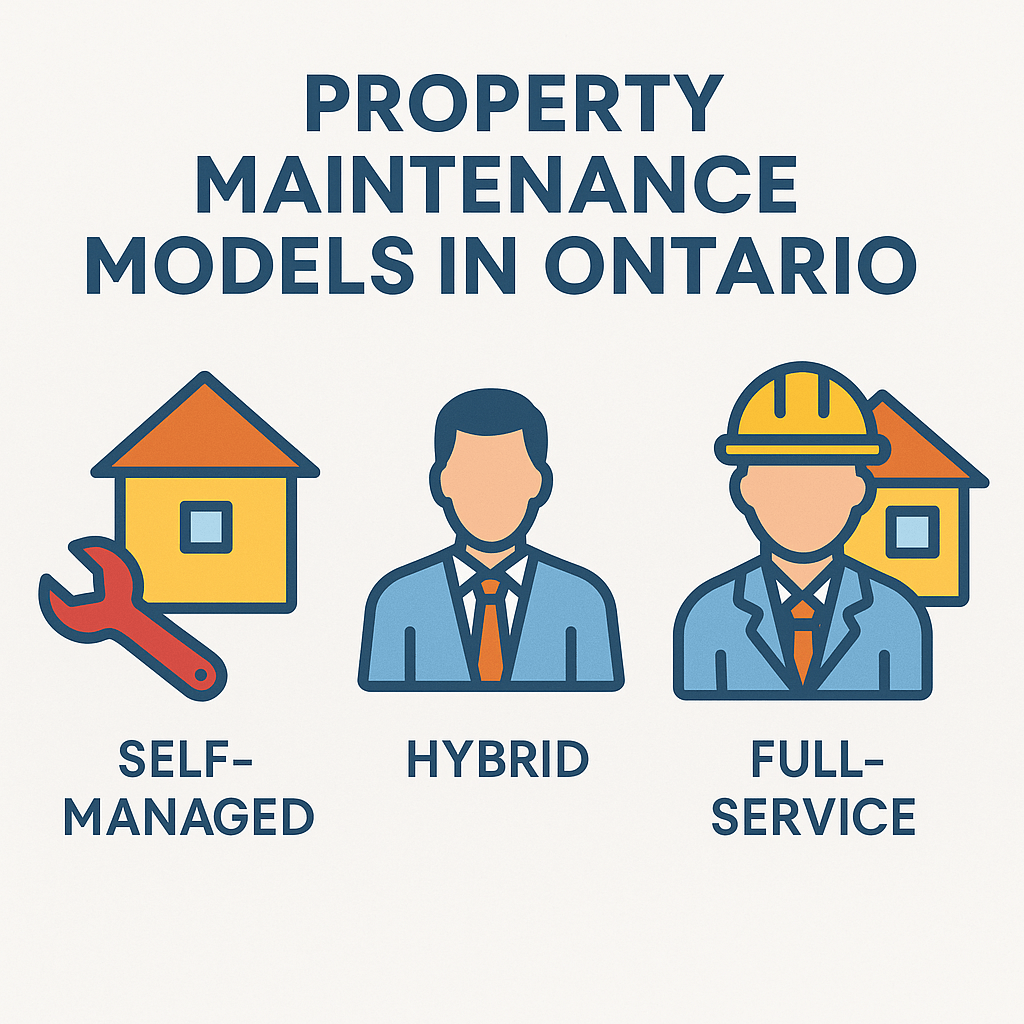
- The In-House Maintenance Model
- The Markup Model
- The Third-Party Coordination Model: Blue Anchor's Approach
- Preventative Maintenance: The ROI Case
- Frequently Asked Questions
Most landlords comparing property management companies in Ontario focus on the management fee percentage. That is understandable. But a July 2026 industry white paper jointly released by BetterWho, Property Meld, and PM University has shifted the conversation in a meaningful way. The data now shows that how a property management company handles maintenance is a far more significant driver of your actual costs than the headline fee you pay each month.
The white paper analyzed real-world labor costs, utilization rates, and preventative maintenance outcomes across hundreds of property management operations in North America. The findings are clear enough that they should change how landlords in Belleville, Trenton, Quinte West, Cobourg, Oshawa, and Picton evaluate the companies they hire. At Blue Anchor, we have reviewed this data carefully, and it confirms the reasoning behind the model we already operate. This article breaks down what the numbers actually mean for you as a property owner.
If you are comparing property maintenance models in Ontario, the right framework is not simply in-house versus outsourced. The right framework is utilization math. Once you understand that, the decision becomes much easier.
The Utilization Problem Nobody Talks About
Here is the core problem with in-house maintenance that almost no property management company will explain to you voluntarily. A maintenance technician earning $25 per hour does not cost $25 per hour. When you account for employer-side payroll taxes, benefits, workers compensation insurance (which can add up to 15% alone), vehicle costs, fuel, and inventory shrinkage (typically around 10% of inventory value), that technician's true cost to the company is closer to $50 per hour. That is the break-even number assuming the technician is billable 100% of the time.
The problem is that 100% utilization does not exist in the real world. According to the 2026 white paper, real-world utilization rates for in-house maintenance technicians at property management companies average around 60%. Technicians spend time driving between properties, waiting on parts, handling administrative tasks, and sitting idle during slow periods. When you apply a 60% utilization rate to that $50 break-even cost, the actual cost per billable hour climbs to approximately $80.
So a company that hired a $25 per hour technician and charges you $65 per hour for maintenance work is not making a modest profit. They are losing money on every service call and subsidizing it quietly from management fee revenue. Many smaller property management companies do not realize this is happening because the losses are absorbed across the business rather than tracked at the maintenance department level. The ones that do realize it tend to either raise their management fees or find other ways to recover the shortfall, often through markups that are not clearly disclosed.
This is not a criticism of any particular company. It is a structural math problem. And the solution is not to work harder at in-house maintenance. It is to understand the scale at which in-house maintenance can actually work.
The 500-Door Threshold
The 2026 white paper identifies approximately 500 doors under management as the threshold below which in-house maintenance is generally not financially viable. The reason is straightforward. High utilization requires high ticket volume. High ticket volume requires a large portfolio. A company managing 150 or 200 properties in a mid-sized Ontario market simply does not generate enough maintenance requests to keep a technician productively busy at the rate required to make the numbers work.
Below 500 doors, the math is definitive. In-house maintenance operations at smaller property management companies lose money on most service calls without recognizing it, because the losses are hidden by cross-subsidy from management income. The company looks profitable overall, but the maintenance function is a drag on the business that eventually gets passed to clients in one form or another.
Above 500 doors, the picture changes. Ticket volume becomes high enough that utilization rates can realistically approach the levels needed to make in-house labor cost-competitive. Large institutional property managers operating thousands of units in major urban markets can make in-house maintenance work well. That is a different business than what most Central Ontario landlords are dealing with when they hire a local property management company.
Blue Anchor operates in Belleville, Trenton, Quinte West, Cobourg, Oshawa, Port Hope, and Picton. These are not markets where a single property management company is likely to cross 500 doors in the near term. That reality shaped our decision to build a third-party coordination model rather than an in-house team, and the 2026 data confirms that decision was correct.
The In-House Maintenance Model
To be fair, the in-house model has genuine advantages at the right scale. When it works, it offers faster emergency response times, staff who become familiar with specific properties over time, and smoother internal communication between the management and maintenance teams. Scheduling minor repairs is easier when you control the labor directly.
The problems emerge when the scale does not support the model. At lower portfolio sizes, the costs described above create pressure that shows up in a few predictable ways. Some companies charge clients market-rate pricing for maintenance while paying staff significantly less, generating a hidden profit margin that is not disclosed. Others generate unnecessary work orders to keep utilization numbers up. Some simply absorb the losses until their management fees have to increase.
There is also a capability ceiling. In-house technicians are typically generalists who handle basic repairs well but require outside contractors for specialized work like HVAC, electrical, plumbing, or roofing. So even companies running in-house teams end up outsourcing a meaningful portion of the work anyway, which raises the question of what the in-house team is actually solving.
From a landlord's perspective, the in-house model also creates a transparency problem. When the same company employs both the manager and the technician, there is less independent verification that work orders are necessary, that pricing is competitive, or that the quality of work meets a reasonable standard. You are trusting a single organization to audit itself.
The Markup Model
The markup model is the most common alternative to in-house maintenance. In this approach, the property manager outsources all repair work to third-party contractors and adds a percentage markup to the invoice before passing it to the landlord. Markups typically range from 10% to 20%, though some companies charge more.
On the surface, this looks like a reasonable arrangement. The manager is coordinating work, communicating with tenants, and handling the administrative side of maintenance. Charging for that coordination makes sense. The problem is that markups are often not disclosed clearly, and the incentive structure they create is not aligned with the landlord's interests. A manager who earns more when invoices are higher has a subtle financial reason to prefer more expensive contractors or to approve work that might not be strictly necessary.
The markup model also does nothing to improve vendor accountability. If a contractor does poor work, the manager's financial interest is in getting the invoice paid, not in disputing it. The landlord bears the cost of callbacks, repeat repairs, and tenant dissatisfaction, while the manager collects a markup on each visit.
For landlords evaluating property management companies in Ontario, the markup model is worth scrutinizing carefully. Ask whether markups are disclosed in the management agreement. Ask how the company selects contractors and what accountability mechanisms exist. The answers will tell you a lot about how the company actually operates. You can also review our analysis of vendor accountability in Central Ontario maintenance for more detail on what good contractor oversight looks like in practice.
The Third-Party Coordination Model: Blue Anchor's Approach
Blue Anchor operates a third-party vendor coordination model. We do not employ in-house maintenance staff, and we do not apply markups to contractor invoices. Landlords pay contractors directly at the rate negotiated by our team, and we handle the coordination, communication, quality oversight, and documentation.
This model works for several reasons. First, it eliminates the utilization math problem entirely. We are not carrying labor overhead that needs to be recovered through service calls. Second, it aligns our incentives with yours. We have no financial reason to prefer expensive contractors or to generate unnecessary work orders. Third, it gives you access to a vetted network of specialists rather than a generalist technician who handles everything from leaky faucets to furnace failures.
Our vendor relationships are built over time in the specific markets we serve. Contractors who work with Blue Anchor know that their continued relationship with us depends on quality, responsiveness, and fair pricing. That accountability structure produces better outcomes than either in-house teams or anonymous markup arrangements.
We also maintain detailed records of all maintenance activity through our property management platform, so landlords have full visibility into what work was done, when, at what cost, and with what outcome. If you want to understand how we handle the full scope of property operations, our owner draw schedule and financial reporting article explains how we keep landlords informed at every stage.
For landlords in Belleville and the surrounding area, our Belleville property management page outlines the full scope of what we manage. We also serve landlords in Trenton, Cobourg, Oshawa, and Picton.
Preventative Maintenance: The ROI Case
The 2026 white paper also contains research on preventative maintenance that every Ontario landlord should understand. The data shows that $1 invested in preventative maintenance returns $4 to $6 in avoided emergency repair costs. That is not a marginal improvement. That is a structural difference in how a property performs financially over time.
Emergency repairs are expensive in every dimension. The parts cost more because they are needed immediately. The labor costs more because the work is urgent. Tenant satisfaction drops because the problem was not caught before it became a crisis. And in Ontario, under the Residential Tenancies Act, landlords have clear obligations to maintain rental properties in a good state of repair. Failing to address maintenance issues proactively creates legal exposure at the Landlord and Tenant Board, not just financial exposure on the repair bill itself.
The white paper also identifies maintenance quality as the number one driver of tenant renewal decisions. This finding matters enormously in the current Ontario rental environment. With the 2026 rent increase guideline set at 2.1%, and with asking rents in many Central Ontario markets softening compared to recent peaks, retaining a good tenant is worth far more than the cost of a well-executed preventative maintenance program. A tenant who renews is a tenant you did not have to re-screen, re-lease, and re-onboard. Our tenant screening process is thorough precisely because we understand how much a quality long-term tenancy is worth.
Preventative maintenance also intersects with Ontario's legal framework in ways that are increasingly difficult to ignore. Bill 60, which came into force in 2025, and the ongoing evolution of LTB processes mean that landlords who can demonstrate a documented maintenance history are in a meaningfully stronger position when disputes arise. Whether you are dealing with an above-guideline rent increase application or responding to a tenant maintenance complaint, records matter. Our seasonal maintenance checklist for Ontario landlords covers the specific inspection and documentation practices we recommend throughout the year.
It is also worth noting that starting September 21, 2026, under Bill 97, the N4 notice period for non-payment of rent is shortened to 7 days. That change accelerates the timeline for landlords dealing with non-paying tenants, but it also raises the stakes for maintaining a well-documented property file. A landlord who has kept thorough maintenance records is a landlord who is prepared for any LTB proceeding. You can read more about the Bill 97 N4 changes and what they mean for landlords in our dedicated analysis.
Frequently Asked Questions
Does Blue Anchor charge a markup on maintenance invoices?
No. Blue Anchor does not apply markups to contractor invoices. Landlords pay contractors directly at the rates our team has negotiated. Our compensation comes from the management fee, not from maintenance billing. This keeps our incentives aligned with yours and gives you full transparency on what repairs actually cost.
How does the 500-door threshold apply to landlords with a small portfolio?
If you own one to five properties in Central Ontario and you are evaluating a property management company, the 500-door threshold is relevant to the company you are hiring, not to you personally. A company managing fewer than 500 doors total that also runs an in-house maintenance team is likely losing money on maintenance and recovering it somewhere else in the business. That somewhere else is usually the landlord. Ask any company you are considering how they handle maintenance economics and whether their model has been stress-tested against real utilization data.
What does preventative maintenance actually look like in practice?
Preventative maintenance includes scheduled inspections, seasonal checks (furnace filters, weatherstripping, roof and eavestroughs, plumbing for freeze risk), and proactive identification of issues before they become failures. At Blue Anchor, we conduct regular property inspections and document findings through our property management platform. Landlords receive inspection reports and can track maintenance history over time. The goal is to catch a $200 problem before it becomes a $2,000 emergency.
How does maintenance quality affect tenant retention in Ontario?
According to the 2026 white paper, maintenance quality is the single strongest predictor of whether a tenant renews their lease. In Ontario, where the RTA limits rent increases to the annual guideline (2.1% for 2026) for sitting tenants, retaining a good tenant at a below-market rent is still almost always preferable to a vacancy and re-leasing cycle. A tenant who feels their maintenance requests are handled promptly and professionally is far more likely to renew. That renewal has real dollar value that most landlords underestimate.
What should I ask a property management company about their maintenance model before signing?
Ask whether they employ in-house staff or coordinate third-party vendors. Ask whether they apply markups to invoices and how those markups are disclosed in the management agreement. Ask how they track and document maintenance history. Ask what their vendor selection and accountability process looks like. And ask specifically how they handle preventative maintenance versus reactive repairs. The answers will tell you whether the company has thought carefully about maintenance economics or whether they are operating on assumptions that will eventually cost you money. Our article on what 500 landlords really think about property managers covers many of these evaluation points in detail.
Choosing the Right Maintenance Model for Your Ontario Rental
The 2026 white paper data makes the framework clear. In-house maintenance works at scale, specifically above approximately 500 doors, where ticket volume supports the utilization rates needed to make the labor economics viable. Below that threshold, the math does not work, and the costs end up somewhere in the landlord's bill whether they are visible or not. The markup model creates misaligned incentives that are worth scrutinizing carefully before you sign a management agreement. And the third-party coordination model, when executed with genuine vendor accountability and full cost transparency, produces the best outcomes for landlords operating in markets like Central Ontario.
Blue Anchor built our maintenance model around these realities before the white paper confirmed them. We coordinate vetted third-party vendors, we do not mark up invoices, and we invest in preventative maintenance because the ROI data is unambiguous. If you are a landlord in Belleville, Trenton, Quinte West, Cobourg, Oshawa, Port Hope, or Picton and you want to understand how our approach would apply to your specific property, we are happy to walk through the numbers with you.
You can also explore our May 2026 Ontario rental market report for current context on the broader conditions affecting landlords in Central Ontario right now.