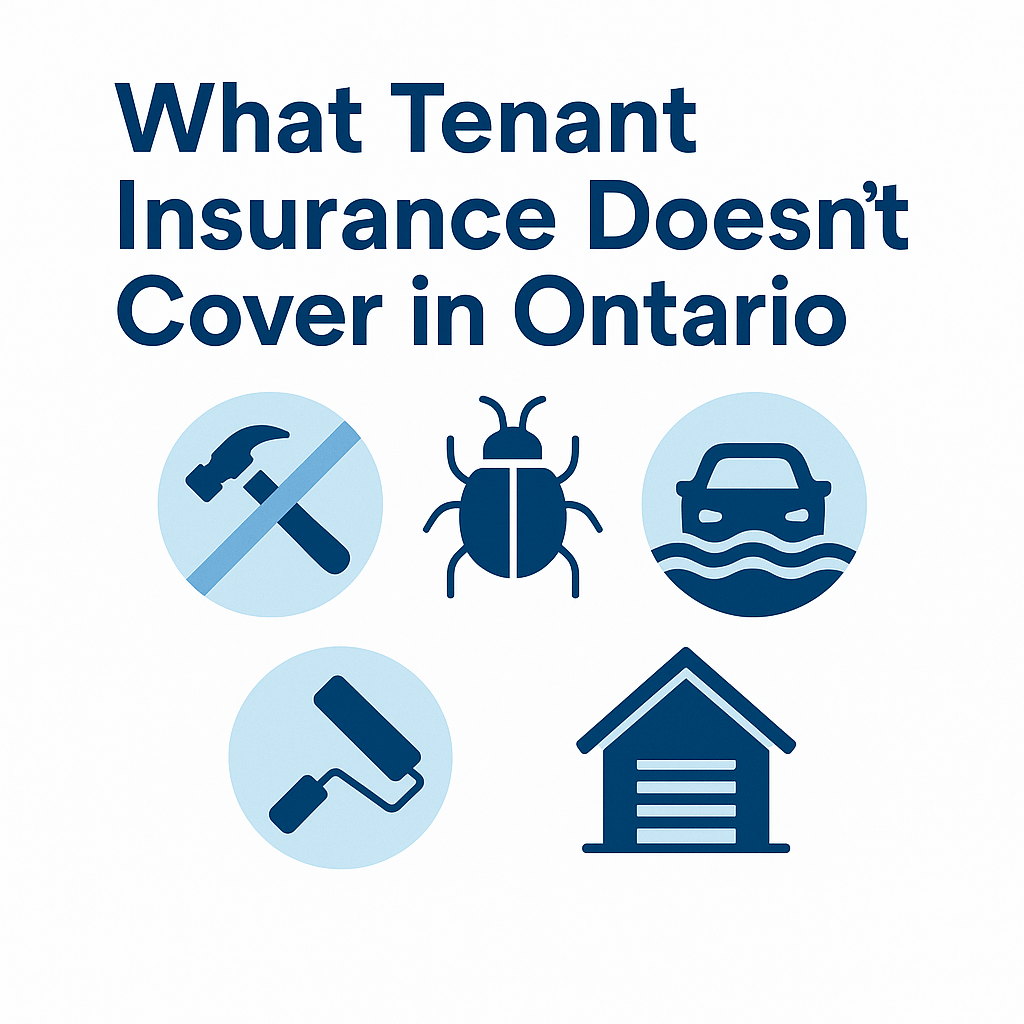
Tenant insurance is one of those things most renters know they should have but few actually read carefully. You sign up, pay your monthly premium, and assume you are covered. Then something goes wrong, and you find out the hard way that your policy has more holes in it than you realized. At Blue Anchor, we have seen this play out more times than we would like to count across our rental properties in Belleville, Trenton, Cobourg, and Oshawa.
The truth is that standard tenant insurance policies in Ontario are designed to cover a specific, fairly narrow set of risks. They do a good job within those limits. But the gaps matter, and if you do not understand them before you need to file a claim, you could be left covering a significant loss out of pocket. This guide walks through the most common exclusions, explains why they exist, and tells you what you can actually do about them.
We are not insurance brokers, and nothing in this article should be taken as formal insurance or legal advice. For specific coverage questions, always speak directly with a licensed insurance professional. That said, we work with tenants every day and we know exactly where the confusion tends to happen.
Common Exclusions in Ontario Tenant Insurance
Before diving into specific categories, it helps to understand the general framework. A standard tenant insurance policy in Ontario typically covers three things: your personal belongings if they are damaged or stolen, personal liability if someone is injured in your unit or you accidentally damage someone else's property, and additional living expenses if you are temporarily displaced because your unit becomes uninhabitable. Everything outside those three buckets is either excluded outright or requires a specific add-on endorsement.
Insurers use the concept of "named perils" versus "all-risk" coverage. A named perils policy only covers losses caused by events specifically listed in the policy, such as fire, lightning, theft, or windstorm. An all-risk policy covers everything except what is explicitly excluded. Most basic tenant insurance policies sold in Ontario are named perils policies, which means if the cause of your loss is not on the list, you are not covered. Some insurers offer broader all-risk policies at a higher premium, but even those come with a long list of exclusions.
Intentional damage is universally excluded. If you, a household member, or someone you invited into the unit deliberately causes damage, your insurer will not pay. This also extends to damage connected to criminal activity. If something goes wrong during an illegal act, coverage is off the table.
Flooding and Water Damage: The Most Misunderstood Exclusion
This is the one that surprises tenants the most. Many people assume water damage is covered under tenant insurance, and in some cases it is. But the source of the water matters enormously, and the distinction can mean the difference between a full payout and nothing at all.
Sudden and accidental water damage is generally covered. If your upstairs neighbour's bathtub overflows and water comes through your ceiling and ruins your furniture, that is typically a covered event. If your own washing machine hose bursts unexpectedly, that is usually covered too. The key word is "sudden."
What is almost never covered under a standard policy is overland flooding, which is water that enters your unit from outside due to heavy rainfall, rising rivers, or storm surges. Ontario has experienced increasingly severe weather events over the past decade, and overland flooding has become a real risk in parts of the province, including areas along the Trent-Severn Waterway and Lake Ontario shoreline communities near Cobourg and Trenton. Some insurers now offer overland flood endorsements as an add-on, but you have to specifically request and pay for that coverage.
Sewer backup is another common exclusion. If municipal drains back up during a heavy storm and sewage enters your unit, a basic policy will not cover the damage to your belongings. Again, this is something you can often add on, but it is not included by default. Gradual water damage, such as a slow leak under a sink that you did not report for months, is also excluded. Insurers view that as a maintenance issue, not an insurable event.
Pest Infestations and the Coverage Gap
Pest damage is excluded from virtually every tenant insurance policy in Ontario, full stop. Mice chewing through your belongings, bed bugs destroying your mattress and furniture, cockroaches contaminating your food storage, or raccoons getting into a storage area, none of that is covered. Insurers classify pest damage as a maintenance and habitability issue rather than an insurable peril.
This is worth understanding in the context of Ontario's Residential Tenancies Act (RTA). Under the RTA, landlords are responsible for maintaining rental properties in a good state of repair and fit for habitation, which includes addressing pest infestations. If pests are present due to the condition of the building, the landlord has an obligation to deal with it. However, even when the landlord is legally responsible for extermination, your insurance policy will not reimburse you for personal belongings that were damaged or destroyed in the meantime. That gap falls on you.
At Blue Anchor, we take maintenance requests seriously and coordinate pest control when issues arise in our managed properties. But we always encourage tenants to understand that their personal property is their own responsibility to protect, and tenant insurance, while valuable, will not help with pest-related losses. For more on who is responsible for pest control in Ontario rentals, we have written about this in detail on our blog.
Business Property and High-Value Items
If you work from home, and a lot of people in Ontario do now, your standard tenant insurance policy likely does not cover your business equipment. A laptop you use exclusively for personal use is covered. A laptop you use to run your freelance business or remote job may not be, or may only be covered up to a very low sub-limit. The same applies to business inventory, product samples, client files, and professional equipment.
This distinction matters more than most tenants realize. If your apartment is broken into and your work computer is stolen, your insurer may ask whether the device was used for business purposes. If it was, they may deny the claim or reduce the payout. Home-based business endorsements exist and are relatively affordable, but you have to add them proactively.
High-value personal items are another area where standard coverage falls short. Most tenant insurance policies cap coverage for categories like jewellery, fine art, collectibles, musical instruments, and electronics at amounts that may be well below the actual replacement cost. A policy might cover jewellery up to $2,000 in total, for example, which is not much if you own a few quality pieces. Scheduled personal property endorsements allow you to list specific high-value items and insure them individually at their appraised value, but again, this requires a deliberate conversation with your insurer.
Roommates, Guests, and Shared Units
This is an area where a lot of tenants make incorrect assumptions. If you have a roommate and you are both named on the lease, you might assume that one tenant insurance policy covers both of you. In most cases, it does not. A standard tenant insurance policy covers the named insured and their immediate family members living in the same household. A roommate who is not a family member typically needs their own separate policy.
Guest liability is a related concern. Your liability coverage generally protects you if a guest is injured in your unit due to your negligence. But if a guest causes damage to the property or injures someone else, your policy may not extend to cover their actions. And if a guest's belongings are stolen from your unit, your policy almost certainly does not cover their property.
In shared housing situations, which are common in cities like Oshawa and Belleville where affordability pressures push renters toward shared arrangements, it is worth having a direct conversation with your insurer about exactly who and what is covered under your policy.
Wear and Tear, Neglect, and Maintenance Issues
Insurance is designed to cover sudden, unexpected losses, not the gradual deterioration that comes with normal use. Wear and tear is excluded from every tenant insurance policy. This means paint fading, carpet wearing down, appliances aging out, or furniture showing normal signs of use are not insurable events. They are simply the cost of living in a space over time.
Neglect is a related exclusion. If you know about a problem, fail to report it or address it, and the situation worsens as a result, your insurer may deny a claim on the grounds that the damage was preventable. A small roof leak that you ignored for a year and that eventually caused significant water damage to your belongings is a good example. The insurer will argue that the damage was not sudden and accidental but rather the result of ongoing neglect.
Under the RTA, tenants have an obligation to maintain their unit in a reasonable state of cleanliness and to report maintenance issues to their landlord in a timely way. This is not just good practice for your tenancy, it also protects your ability to make a valid insurance claim if something does go wrong.
Vehicles and What Happens in Parking Areas
Your tenant insurance policy does not cover your vehicle. That is what your auto insurance is for. But the lines can get blurry when it comes to items stored inside your vehicle or damage that happens in a parking area associated with your rental unit.
If your car is broken into and items are stolen from inside it, whether those items are covered depends on your specific policy and where the theft occurred. Some tenant insurance policies extend personal property coverage to belongings stolen from a vehicle, up to a sub-limit. Others do not. Your auto insurance policy may cover the theft of items from your vehicle under comprehensive coverage, but again, sub-limits and deductibles apply.
Damage to your vehicle in a parking lot, whether from a storm, a falling tree, or another driver, is an auto insurance matter, not a tenant insurance matter. Your tenant policy will not help there.
How Blue Anchor Approaches Tenant Insurance
At Blue Anchor, we require all tenants in our managed properties to carry valid tenant insurance throughout their tenancy. This is a standard condition in our lease agreements, and it protects both the tenant and the property owner. We have seen firsthand what happens when a tenant without insurance faces a significant loss, and it is not a situation anyone wants to be in.
Because we work with a lot of tenants across Central Ontario who are navigating the insurance market for the first time, we built our own renters insurance program through Walnut Insurance. It runs between $30 and $42 per month and includes $1 million in liability coverage plus $100,000 in pet liability coverage. It is not the only option available to our tenants, but it is a straightforward one that we know meets the coverage requirements in our leases. You can read more about why we built our renters insurance program and how it benefits tenants on our blog.
At Blue Anchor, we also make a point of walking tenants through what tenant insurance does and does not cover at the start of a tenancy. We would rather have that conversation upfront than deal with a situation where a tenant assumed they were covered and were not. If you are renting one of our properties in Belleville, Trenton, or elsewhere in Central Ontario, your property manager can point you toward resources to help you choose the right policy.
For landlords who want to understand how insurance intersects with maintenance obligations and cost realities, our post on insurance and maintenance cost reality is worth reading. And if you are a landlord wondering how we screen the tenants who will be living in your property, our tenant screening process is documented in detail.
Frequently Asked Questions
Does tenant insurance cover damage I accidentally cause to the rental unit?
Your liability coverage may help if you accidentally damage the rental property, for example if you start a small fire while cooking that damages the kitchen. However, intentional damage is never covered, and damage you cause through neglect or failure to maintain your unit may also be excluded. The specifics depend on your policy wording, so it is worth reviewing that section carefully or asking your insurer directly.
Is my bicycle covered under tenant insurance if it is stolen outside?
Many tenant insurance policies do extend personal property coverage to belongings stolen away from your home, including bicycles, but typically up to a sub-limit that may be much lower than the bike's replacement value. High-end bicycles often need to be scheduled separately to be fully covered. Check your policy's off-premises coverage limit and consider a scheduled endorsement if your bike is worth more than that limit.
What happens if my unit is broken into but there is no sign of forced entry?
This is a common claim issue. If there is no evidence of forced entry, some insurers may question whether a theft actually occurred and may deny or reduce the claim. Keeping an inventory of your belongings, including photos and receipts for high-value items, makes it much easier to support a claim in these situations. A police report is also typically required for theft claims.
Does tenant insurance cover my belongings if there is a flood in the building common areas?
It depends on the source of the water and where your belongings were. If water from a common area flood enters your unit and damages your property, your policy may cover it as sudden and accidental water damage. But if the flooding originated from an external source like heavy rainfall or a sewer backup, standard coverage likely does not apply unless you have added those endorsements.
Can my landlord require me to have tenant insurance in Ontario?
Yes. While the Residential Tenancies Act does not specifically mandate tenant insurance, landlords in Ontario can include a requirement to maintain tenant insurance as a condition of the lease. This is a standard and legally permissible clause. At Blue Anchor, we include this requirement in all of our leases and verify coverage at the start of each tenancy.
The Bottom Line for Ontario Renters
Tenant insurance is genuinely worth having. The liability protection alone is valuable, and coverage for personal belongings and temporary displacement can make a real difference when something goes wrong. But it is not a blanket safety net, and treating it like one is a mistake that costs Ontario renters money every year. The exclusions around flooding, pests, business property, and high-value items are real, and the only way to close those gaps is to understand them and address them proactively with your insurer.
At Blue Anchor, we manage long-term residential rentals across Belleville, Trenton, Quinte West, Cobourg, Oshawa, Port Hope, and Picton, and we take the tenant experience seriously. If you are renting through us and have questions about your insurance requirements, reach out to your property manager. If you are a landlord wondering how we protect your investment through our management practices, take a look at our Belleville property management or Cobourg property management pages to learn more about how we work.
Disclaimer: This article is for general informational purposes only and does not constitute insurance, legal, or financial advice. Coverage terms vary by insurer and policy. Always consult a licensed insurance professional for advice specific to your situation.