
Best Neighborhoods for Rental Investment in Belleville and Trenton
Why Belleville and Trenton Still Attract Serious Rental Investors
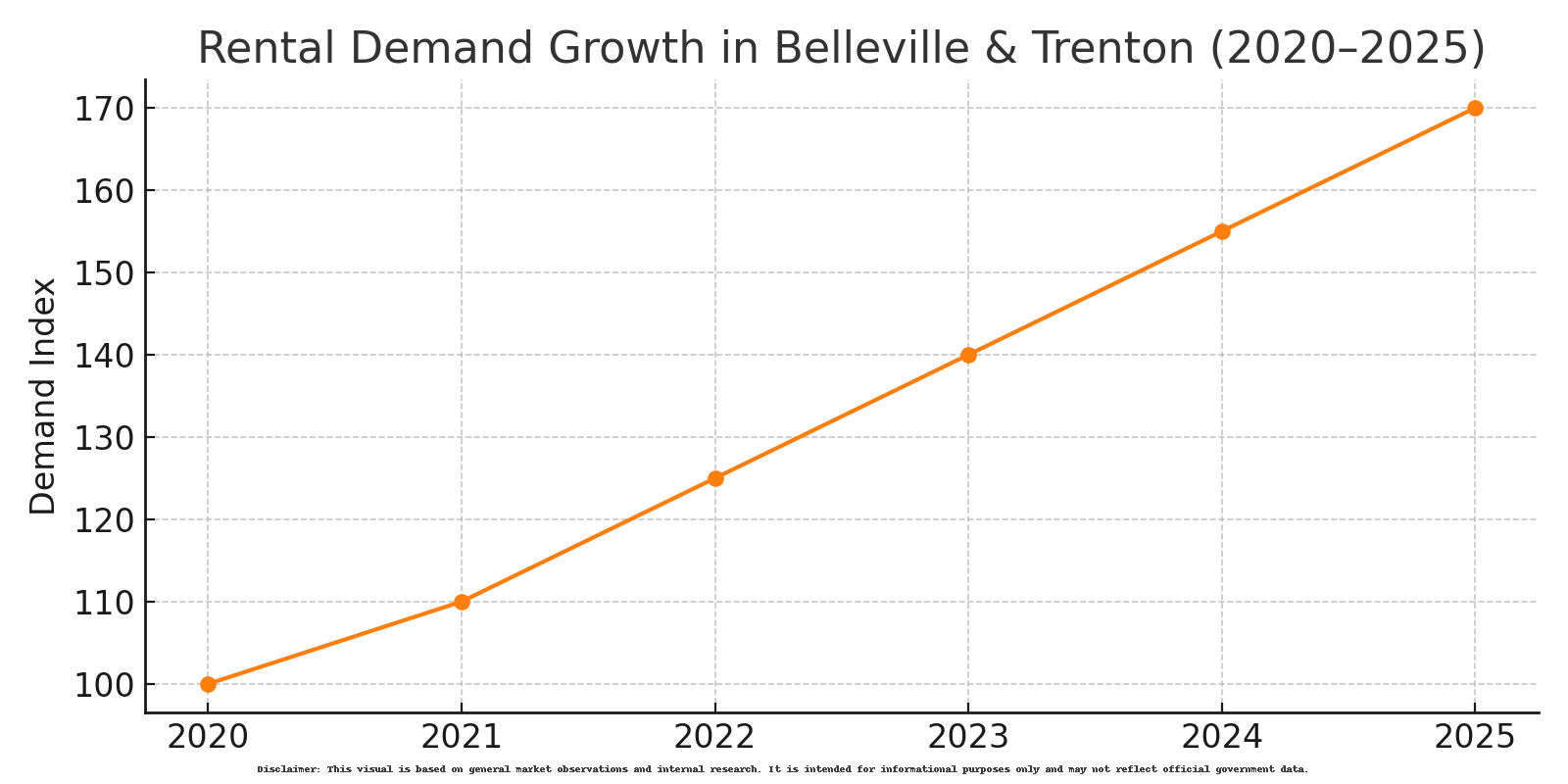
Belleville and Trenton sit at the heart of Ontario's Quinte Region, and they continue to draw landlords who want steady income without the price pressure of larger urban centres. The two cities serve genuinely different tenant pools, which means a well-chosen property here rarely sits empty for long. Military postings, college enrollment, healthcare employment, and a steady flow of people priced out of Toronto and Kingston all feed demand across a range of housing types.
At Blue Anchor Property Management, we cover this corridor every day. We manage long-term residential properties from Oshawa to Belleville, with properties as far north as Campbellford and down into Picton, so we see which streets lease quickly, which tenant groups are growing, and where the housing stock supports the kind of income a landlord actually needs. This guide reflects that on-the-ground view. We have deliberately avoided publishing price figures we cannot source precisely, because market conditions shift and a stale number does more harm than good. Instead, we describe each area by what drives demand there and what the housing stock looks like.
If you are still deciding whether this region makes sense for your portfolio, our post on why Belleville is a great place for rental investments and our broader Trenton and Belleville real estate investments guide give useful context before you read the neighbourhood breakdowns below.
How We Assess a Neighbourhood for Rental Potential
We look at a handful of factors that actually predict landlord outcomes rather than headlines about average prices:
- Tenant demand depth: how many qualified applicants typically compete for a vacancy in that area
- Housing stock suitability: whether the existing homes lend themselves to legal secondary suites, duplex conversion, or straightforward single-family rentals
- Proximity to anchor employers and institutions: CFB Trenton, Loyalist College, Quinte Health, and the Highway 401 corridor
- Leasing velocity: how quickly comparable units are absorbed when listed
- Regulatory environment: zoning that permits the use you intend, and no unusual municipal restrictions
None of these factors require us to publish a price-per-square-foot figure that will be wrong in six months. They are the same criteria we apply when a new owner asks us whether a property is worth taking on.
Top Neighbourhoods in Belleville for Rental Investment
Old East Hill
Old East Hill is one of the most consistently active rental neighbourhoods in Belleville. The housing stock is older, which means character and space, but also means investors need to budget for maintenance and upgrades. The payoff is that large homes here convert well into legal duplexes or triplexes, and Belleville's zoning updates in recent years have made secondary suite approvals more straightforward. Demand comes from a mix of students, young professionals, and long-term residents who value walkability to the downtown core and the waterfront. Vacancy periods tend to be short when a unit is well-presented and priced at market.
Belleville's rezoning changes are worth understanding before you buy here. Our post on Belleville's new rezoning explains what the changes mean for investors adding units to existing properties.
West End Belleville
The West End is a quieter, more suburban feel with good schools and parks. It attracts families and longer-tenured renters, which translates to lower turnover costs for landlords. Proximity to Loyalist College means students occasionally compete for the same housing stock, but the dominant tenant profile here is working families and couples. Basement suite conversions are common, and the neighbourhood's layout supports them structurally in many cases. Retention rates among tenants in this area tend to be above average, which matters a great deal when you factor in the cost of re-leasing.
Downtown Belleville
Downtown Belleville has seen continued investment in its commercial core, and that activity supports rental demand from people who want to walk to work, restaurants, and transit. The zoning here permits mixed-use and multifamily configurations in many parcels, which gives investors more flexibility than a purely residential neighbourhood. The tenant profile skews younger and more mobile, so turnover is higher than in the West End, but so is the applicant volume when a unit comes available. Investors who want to hold a small apartment building or a converted commercial-residential property will find this area worth examining closely.
Cannifton Road and Thurlow (East Belleville)
This corridor has grown steadily with new residential development alongside older housing. The mix of price points means investors can enter at different budget levels. Access to Highway 62 and nearby shopping makes it practical for tenants who commute. Legal secondary suites are feasible in many of the larger lots here, and the newer builds attract tenants who want modern finishes without paying downtown rents. Demand is solid rather than spectacular, but the consistency is what many landlords actually want.
Top Neighbourhoods in Trenton and Quinte West for Rental Investment
Sidney Ward (CFB Trenton Area)
Sidney Ward is the most reliably occupied rental area in Quinte West, and the reason is straightforward: CFB Trenton is one of Canada's largest military bases, and posted members need housing on short timelines. Military families are generally excellent tenants. They have stable employment income, they tend to maintain properties well, and their postings create a predictable cycle of turnover that keeps the rental market active without producing the kind of extended vacancy that hurts returns. Homes in this area often have layouts that suit families, and the proximity to Highway 401 is a practical draw for anyone commuting west.
We have written specifically about what military members need when they are posted to CFB Trenton, and that post is useful reading for any landlord targeting this tenant group: posted to CFB Trenton: stress-free rental finds for military members.
Our Trenton property management services are built around the specific rhythms of this market, including the compressed timelines military families often face when searching for a home.
East Trenton (Parkview Heights)
East Trenton offers older housing stock at lower acquisition costs relative to the Sidney Ward area. For investors willing to put work into a property, the value-add potential is real. Tenants here are a mix of working families, tradespeople, and retirees. The neighbourhood is not as immediately close to the base, but it draws from the same broad employment base and benefits from Trenton's overall low vacancy environment. Renovation quality matters more here than in tighter markets because tenants have options, and a well-maintained unit commands meaningfully better rent than a neglected one.
Frankford (North Quinte West)
Frankford sits north of Trenton proper and has a small-town character that appeals to retirees and families who want more space and lower density. Properties here tend to have larger lots and lower property taxes than comparable homes closer to the urban core. The tenant base is consistent if not deep, meaning you may see fewer applicants per vacancy but the ones who apply tend to stay longer. Investors who prefer a quieter management experience and are comfortable with a slightly slower leasing pace often find Frankford a good fit.
Tenant Demographics Across Both Cities
Understanding who is renting in this region helps you choose the right property type and set realistic expectations for turnover and rent levels. The four main tenant groups we see across Belleville and Trenton are:
- Military families: Concentrated near CFB Trenton, with predictable posting cycles and strong income stability. They prioritize space, school proximity, and quick lease execution.
- Loyalist College students and staff: Active primarily in Belleville's West End and areas close to the college. Students typically need one- and two-bedroom units or rooms within shared houses. Staff and faculty tend to be longer-term tenants.
- Young professionals and healthcare workers: Drawn to downtown Belleville and areas close to Quinte Health facilities. They value walkability and modern finishes.
- Retirees and downsizers: Growing across both cities as people move from larger Ontario centres seeking lower costs and a quieter pace. They tend to be long-term, low-maintenance tenants.
Matching your property type to the dominant tenant group in a given neighbourhood is one of the most reliable ways to reduce vacancy and turnover costs. Our post on renting to families versus singles in central Ontario goes deeper on this question.
What Ontario Landlords Need to Know Right Now
The legal environment for landlords in Ontario has changed meaningfully in the past year, and investors in Belleville and Trenton need to be current on two pieces of legislation in particular.
Bill 97 (Helping Homebuyers, Protecting Tenants Act, 2023) introduced renovation right-of-first-refusal duties and a bad faith presumption on own-use eviction notices. If you are considering a property where you might eventually want to renovate or reclaim a unit, you need to understand these obligations before you buy, not after.
Bill 60 (Fighting Delays, Building Faster Act) received Royal Assent on November 27, 2025, and its most significant change for landlords took effect on September 21, 2026: the N4 notice period for non-payment of rent was shortened from 14 days to 7 days. Bill 60 also introduced a written persistent late payment test for N8 applications. These are not minor procedural changes. A landlord who serves an N4 using the old 14-day form after September 21, 2026 is serving a defective notice. We have a detailed breakdown at Ontario Bill 60: N4 notice period 7 days and a broader summary at Bill 60 is in force.
The 2026 rent increase guideline is 2.1 percent. If you have existing tenants and have not yet issued an N1 for this cycle, review the timing rules carefully. Our guide to increasing rent using the N1 form walks through the process step by step.
Frequently Asked Questions
Does Blue Anchor manage properties in all of these neighbourhoods?
Yes. Blue Anchor Property Management covers Oshawa to Belleville, with properties as far north as Campbellford and down into Picton. That means we actively manage properties in Old East Hill, the West End, downtown Belleville, the Cannifton corridor, Sidney Ward, East Trenton, and Frankford. You can learn more about our local services at our Belleville property management and Trenton property management pages.
What does Blue Anchor charge to manage a property in this area?
Our Standard plan is 5 percent of collected rent per unit per month, with a $50 minimum on occupied units. There is no management fee in any month a unit is vacant and no rent is collected. Tenant placement is 50 percent of one month's rent. Work order coordination is a flat $25 with no percentage markup on repairs. Inspections are $99 each on Standard. Our Platinum plan is $295 per unit per month on a 12-month minimum and includes ancillary services. Full details are on our pricing page.
Which neighbourhood is best for a first rental property in this region?
There is no single right answer because it depends on your budget, your tolerance for turnover, and whether you want to add a secondary suite. That said, Sidney Ward in Trenton and the West End in Belleville are the two areas we most often point newer investors toward. Both have stable, identifiable tenant pools, reasonable leasing velocity, and housing stock that suits straightforward single-family or duplex rentals. Our post on best real estate tips for beginners in Trenton and Belleville is a useful companion read.
How does the N4 change under Bill 60 affect my day-to-day management?
As of September 21, 2026, you can serve an N4 after just 7 days of non-payment rather than 14. This shortens the timeline before you can file an L1 application at the Landlord and Tenant Board. It does not mean you must act on day 8, but it does mean your rent ledger and notice procedures need to be precise. Bill 60 also introduced a written test for persistent late payment under the N8 process, so documentation of a pattern of lateness is now more formally required. We handle all of this for our managed properties as part of our standard service.
Is Frankford worth considering if I want lower entry costs and a quieter tenant base?
It can be, but go in with realistic expectations about applicant volume. Frankford does not generate the same number of inquiries per listing as Sidney Ward or downtown Belleville. The tenants who do apply tend to stay longer, which reduces turnover costs, but you may need to be patient during a vacancy. If your financing can absorb a slightly longer lease-up period and you value stability over volume, Frankford is a legitimate option. If you need the unit filled quickly, focus on the areas closer to the base or the college first.
If your property is in or near Trenton, see our Trenton property management page, or read about our free owner calculators.
Ready to Put Your Investment to Work
Belleville and Trenton offer a genuine combination of tenant demand diversity, housing stock flexibility, and a legal environment that, with proper management, rewards landlords who stay current and operate professionally. Whether you already own here or are evaluating your first purchase, Blue Anchor Property Management is ready to talk through what makes sense for your specific property and goals. Reach out through our Belleville or Trenton pages to start the conversation.
